A worker sustained foot fractures and impact injuries after an 80 kg rock hook violently ejected during crusher blockage removal. The hook slipped under tension as workers attempted to remove a lodged rock from a primary jaw crusher chute.
Damaged or missing grizzly bars allowed oversize material to enter the crushing circuit and created repeated blockages. Workers used a non-engineered L-shaped hook to retrieve the material. When the hook disengaged, it released stored energy and propelled itself beyond the handrail, where it struck the worker on the platform. The task occurred at night, and workers operated in limited visibility without physical containment controls.
The incident shows how degraded primary controls and improvised tools expose workers to high-energy ejection and line-of-fire hazards. It demonstrates how quickly routine clearing tasks escalate when workers fail to control stored energy and remain within the potential travel path.
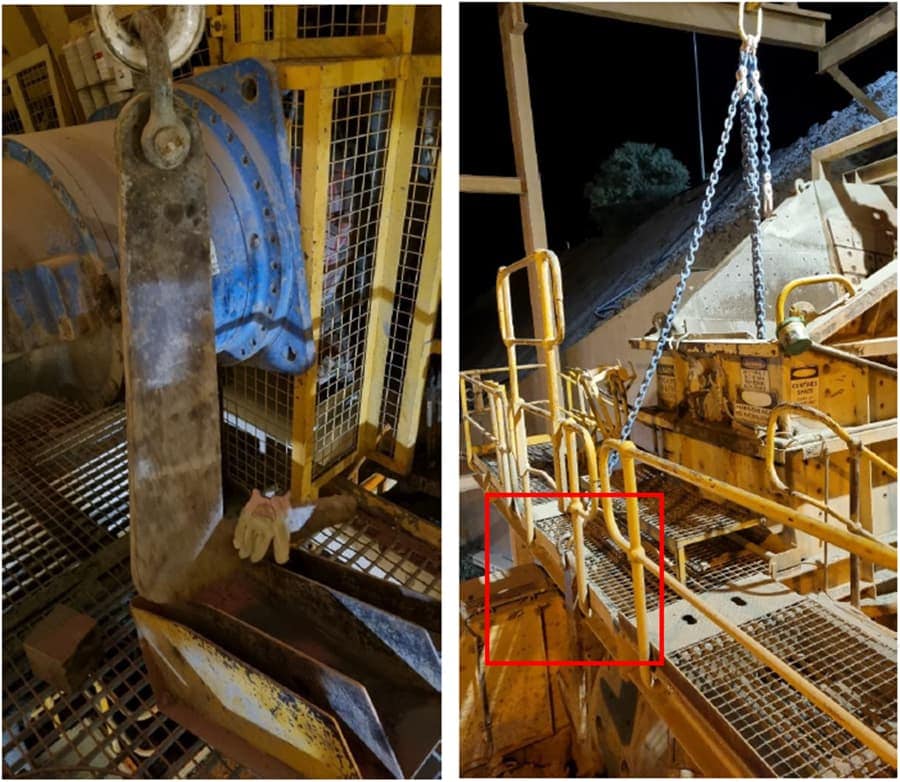
The L-shaped hook (left) and its resting position after striking the worker (right)
Takeaways
- Maintain primary controls: Repair or replace grizzly bars to prevent oversize material entering the crushing circuit and creating blockages.
- Use engineered equipment: Select fit-for-purpose tools with fail-safe features for blockage removal tasks.
- Control stored energy: Install guarding, barriers or exclusion zones to contain ejection forces and projectile risks.
- Remove personnel from risk: Use remote systems such as rock breakers to keep workers clear of chutes and bins.
- Verify competency: Restrict high-risk crusher tasks to trained and authorised personnel.
- Improve task conditions: Provide adequate lighting and visibility during night operations.
- Enforce procedures: Maintain supervision and intervene when unsafe or improvised methods occur.