
A recent incident has highlighted the risks of mercury exposure in gold room operations. Mercury and other heavy metals are commonly found in gold-bearing ores, and routine biological monitoring at one site revealed that some gold room workers had excessive levels of mercury in their system.
When the mine operator investigated, they failed to properly identify the cause of the exposure. This led to specialist mines inspectors visiting the site, where they found several serious issues contributing to the problem:
- The local extraction ventilation (LEV) had not been properly commissioned and wasn’t working effectively. R.623 requires performance standards to assess control effectiveness—and this hadn’t been done.
- Poor placement of dilution ventilation fans interfered with extraction ventilation, reducing its effectiveness. Smoke tests confirmed this (see photo).
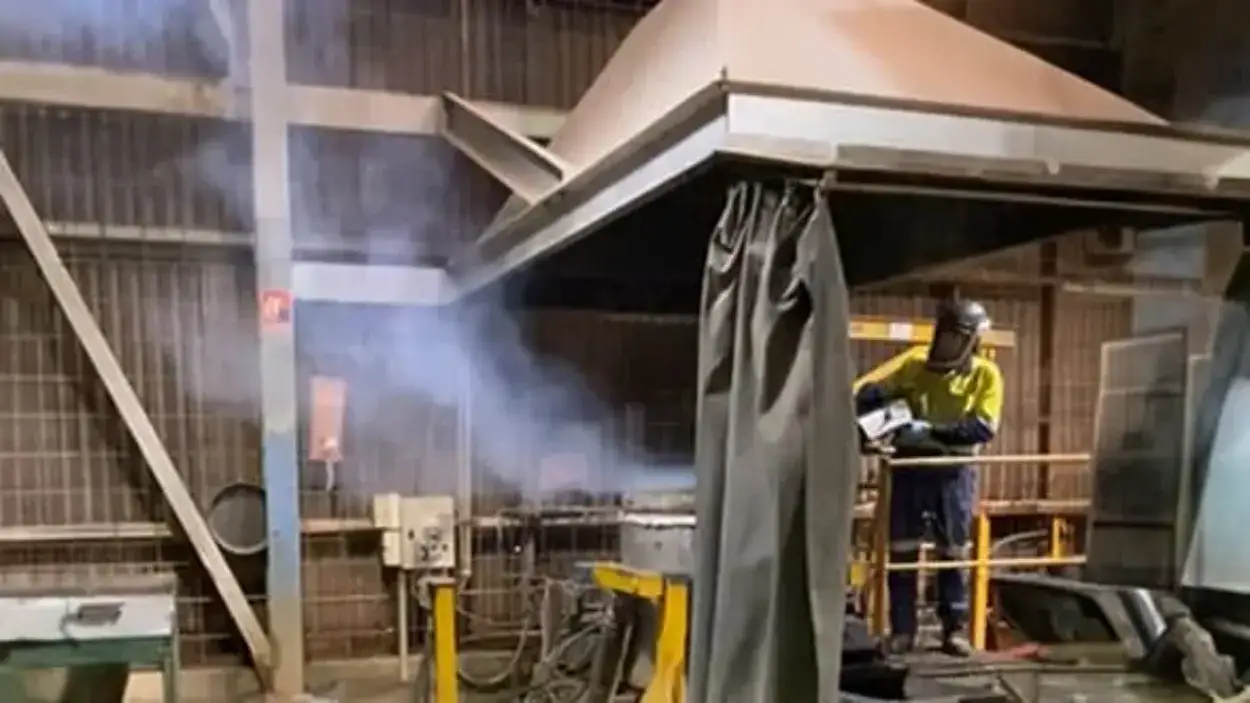
- Mercury contamination was widespread due to spills and ineffective extraction ventilation. Surface swabbing showed contamination across multiple areas.
- The gold room itself was built with porous materials like masonry, making proper decontamination impossible.
- Air monitoring found mercury vapours being released from contaminated surfaces, meaning workers were exposed even when gold pouring wasn’t happening.
- As a result, compliance actions have been taken by the WorkSafe Mines Safety.
Key takeaways for industry
- Know your hazards – Mercury is a well-known risk (r.34).
- Use the hierarchy of controls – If a hazard can’t be eliminated, then the hierarchy of controls must be applied (r.36).
- Ventilation must be effective – Correctly designed and commissioned extraction ventilation is a reasonably practicable control.
- Verify control effectiveness – Performance standards and audit protocols must be in place to ensure effectiveness of the controls (r.623).
- Health monitoring is essential – Workers exposed to mercury above the exposure standard must be included in a biological monitoring program (r.675EA(4)(e)) and a medical health monitoring program (r.675F).